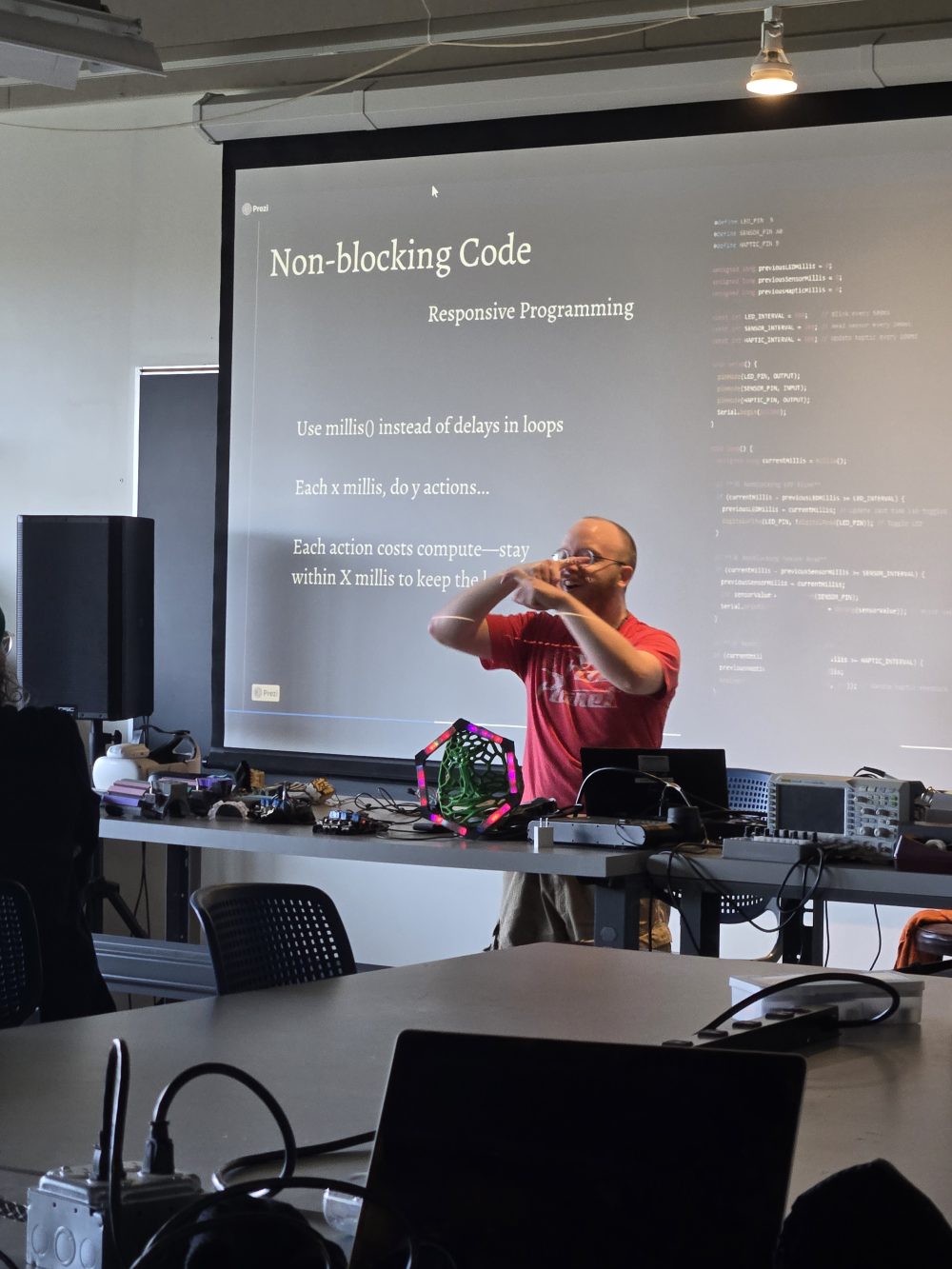
Dillon Simeone is a deaf audio engineer, electronics engineer, and designer working with the Universal Music Design (UMD) team at CymaSpace, a local nonprofit whose mission is to enhance arts and culture accessibility for the Deaf and Hard of Hearing (DHH) community.
Dillon visited PCC’s MUC 262: Interface Design class on March 3 to share his approach to interface design and iterative, user-centered prototyping for the Deaf and Hard of Hearing community.
MUC 262 is a second-year course in the Associate Degree for Creative Coding and Immersive Technology, which is part of PCC's Music and Sonic Arts Program. It is an advanced class where students study user- and human-centered design techniques, engaging in hands-on work to build new, innovative interfaces for controlling sound, light, and video.
Human-Centered Design in Action
Simeone’s process and technical design expertise offered students a fascinating masterclass in human-centered design, accompanied by a table full of innovative sound, haptic, and light objects purposefully engineered for Deaf and Hard of Hearing musicians.
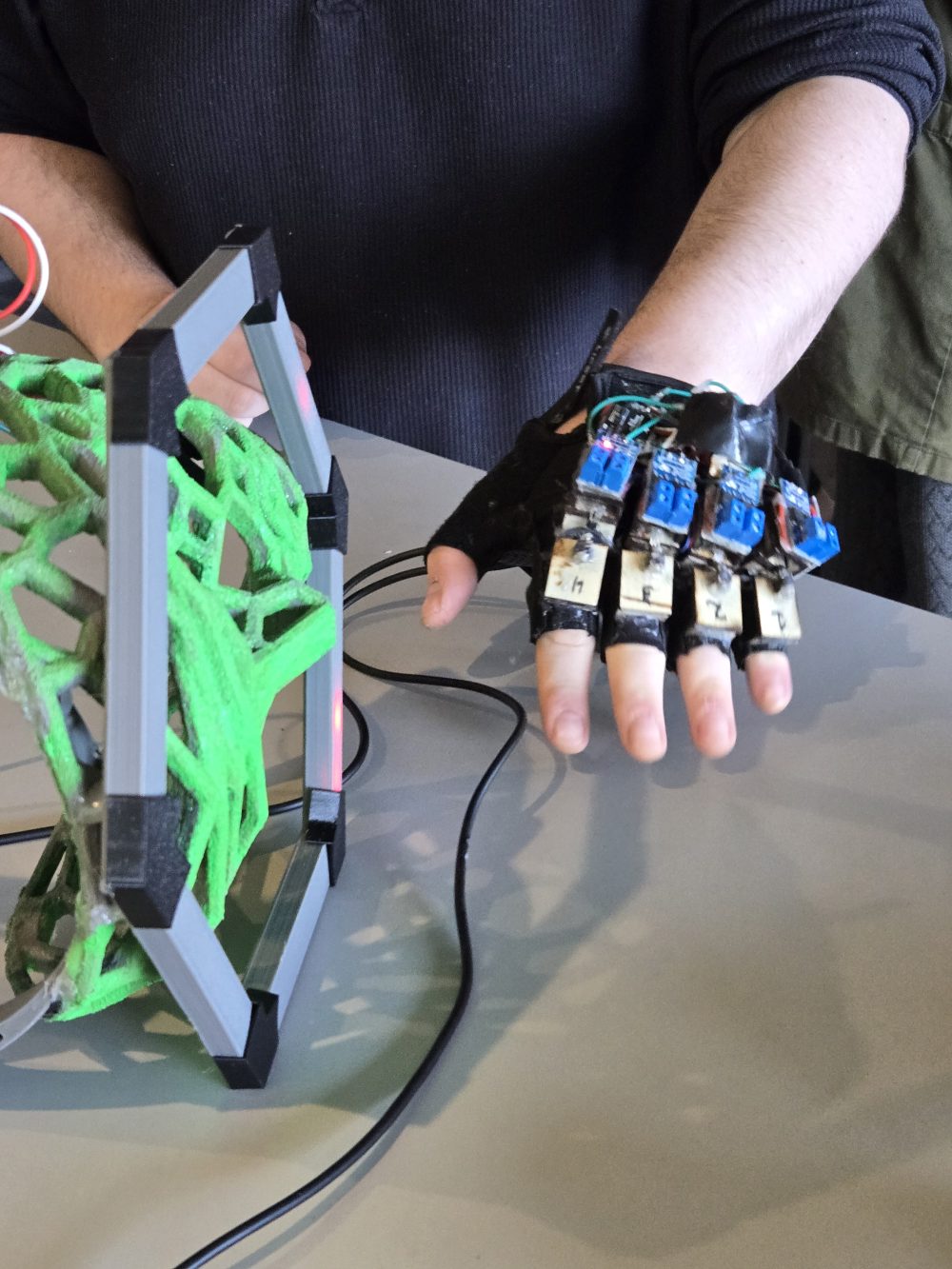
Students got to do hands-on exploration with GeLu (Gestolumina), a new instrument for Deaf musicians presented at the 2024 NIME Conference (New Interfaces for Musical Expression), among many other inventions.
GeLu combines two synchronized bracelets – one with gesture sensing and vibrohaptic feedback, and another with dynamic LED color feedback – enabling users to intuitively visualize and physically feel audio data synchronized with musical sound in real time.
To learn more about Dillon Simeone's creative engineering, portfolio, and accessible interface designs, visit his website at dillonsimeone.com. You can also read the original publication by the PCC HARTS (Humanities and Arts) Initiative.