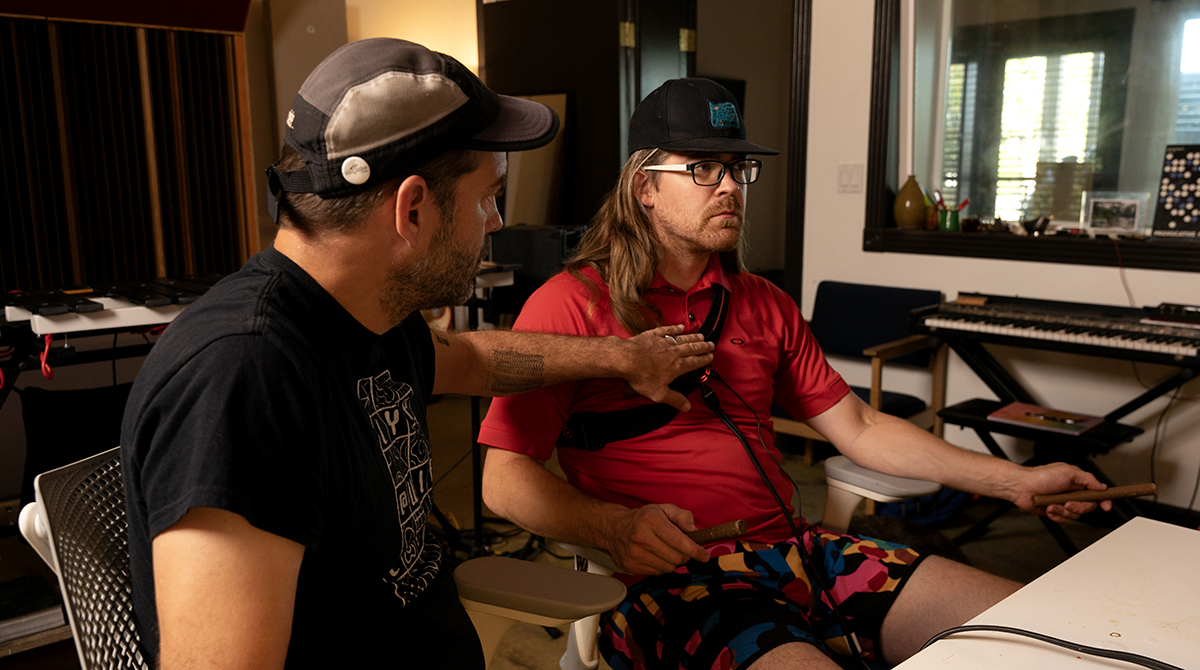
In an extensive profile published by Portland news publication Street Roots, journalist Ellen Clarke explored how Southeast Portland nonprofit CymaSpace is revolutionizing musical accessibility through tactile vibration and visual acoustics, ensuring Deaf and hard-of-hearing community members experience live music on equal sensory footing.
Sound You Can Feel: The Vibrotactile Revolution
For many hearing people, live music is primarily an auditory experience. But as Street Roots highlights, sound is fundamentally kinetic—a physical pressure wave traveling through space and matter. CymaSpace harnesses this fundamental law of physics to engineer tactile dance floors, wearable transducer harnesses, and responsive lighting systems that translate high and low frequencies into precise, palpable somatic feedback.
The feature highlights the work of CymaSpace technologist and designer Shawn Trail alongside creative technologist Dillon Simeone (collaborator on the Universal Music Design initiative). Through customized hardware arrays and resonant transducers mounted beneath modular flooring panels, low-frequency bass lines, kicks, and synth arpeggios resonate directly into listeners' feet, chest, and bones.
“When sound is translated into resonant physical vibration and synchronized light, music ceases to be an exclusive auditory medium. It transforms into an immersive, multi-sensory encounter that belongs to everyone.”
Universal Music Design and Creative Empowerment
Beyond audience experiences, the profile detailed CymaSpace's commitment to empowering Deaf creators as musicians, composers, and performance artists. Through the Universal Music Design (UMD) project, the team designs tactile instruments, digital audio workstation (DAW) integrations, and haptic monitoring systems that allow musicians who do not hear traditional sound to compose, perform, and modulate audio with precision.
The article emphasized how CymaSpace bridges the divide between cutting-edge technology and community-rooted advocacy, championing accessibility not as an afterthought or compliance checklist, but as the generative core of artistic creation.
Original Coverage & Archived Record
Read the complete original investigative feature by Ellen Clarke on Street Roots:
Learn More About CymaSpace Initiatives
- Explore our research and instrument prototyping: Universal Music Design (UMD)
- Discover youth education programs: SignKids Youth & STEAM Programs
- Learn how to equip your venue: Audio-Visual & Vibrotactile Technology