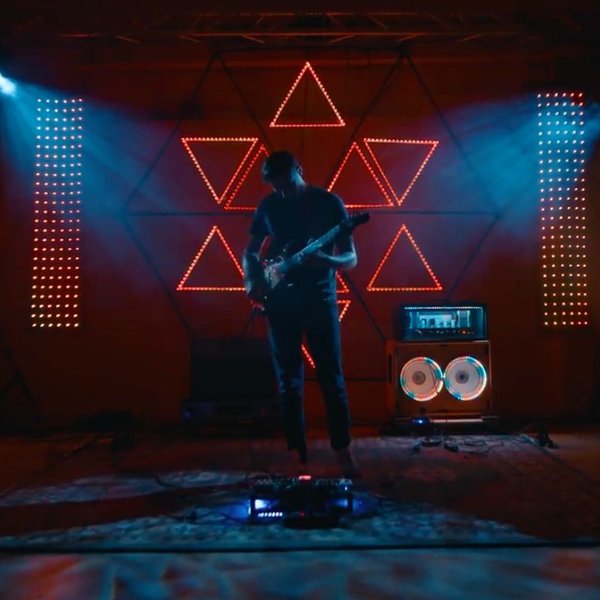
Featured across both Hackaday and Make: Magazine, CymaSpace’s custom electronics platform—the Audiolux One—and its acclaimed Interactive LED Piano demonstrated how open-source maker technology can break accessibility barriers in the performing arts.
The Audiolux One: Open-Source Sound Visualization
Standard consumer lighting controllers introduce perceptible latency (often 50–150 ms), ruining the synchronization between musical notes and visual pulses. To overcome this latency barrier, CymaSpace engineered the Audiolux One—a dedicated microcontroller shield incorporating hardware analog filtering chips:
- MSGEQ7 7-Band Graphic Equalizer IC: Splitting incoming line-level or microphone audio into seven discrete frequency bands (63 Hz, 160 Hz, 400 Hz, 1 kHz, 2.5 kHz, 6.25 kHz, and 16 kHz) directly in analog circuitry.
- Sub-Millisecond Latency: Delivering near-zero latency audio analysis to Arduino and Teensy microcontrollers without taxing CPU cycles with heavy software FFT processing.
- High-Speed Addressable LED Drivers: Capable of driving thousands of WS2812B and APA102 digital LEDs at 60+ frames per second.
The Interactive LED Piano at OMSI Makerlandia
At the annual OMSI Maker Faire in Portland, profiled in Make: Magazine’s “Makerlandia” exhibition review, CymaSpace unveiled an upright piano retrofitted with optical key sensors and custom RGB LED channels embedded inside the piano body. As museum visitors played keys, individual pitches sparked cascading light ribbons that mapped directly to musical intervals.
Deaf children and adults who had never experienced playing an acoustic piano could immediately see harmony, chord voicings, and polyphony unfold in luminous geometry before their eyes.
“When you see a major chord shine in warm primary colors while a dissonance creates an intricate flickering pattern, the underlying mathematical beauty of music becomes instantly intuitive and universally legible.”
Explore Project Documentation
Dive into the open hardware schematics and technical writeups published on Hackaday:
Learn More About CymaSpace Hardware
- Core Technologies: Audio-Reactive Lighting & Transducers
- Interactive Visualizer: Try the Live CymaSpace Audio Visualizer
- STEAM Education: Accessible Youth STEAM Workshops